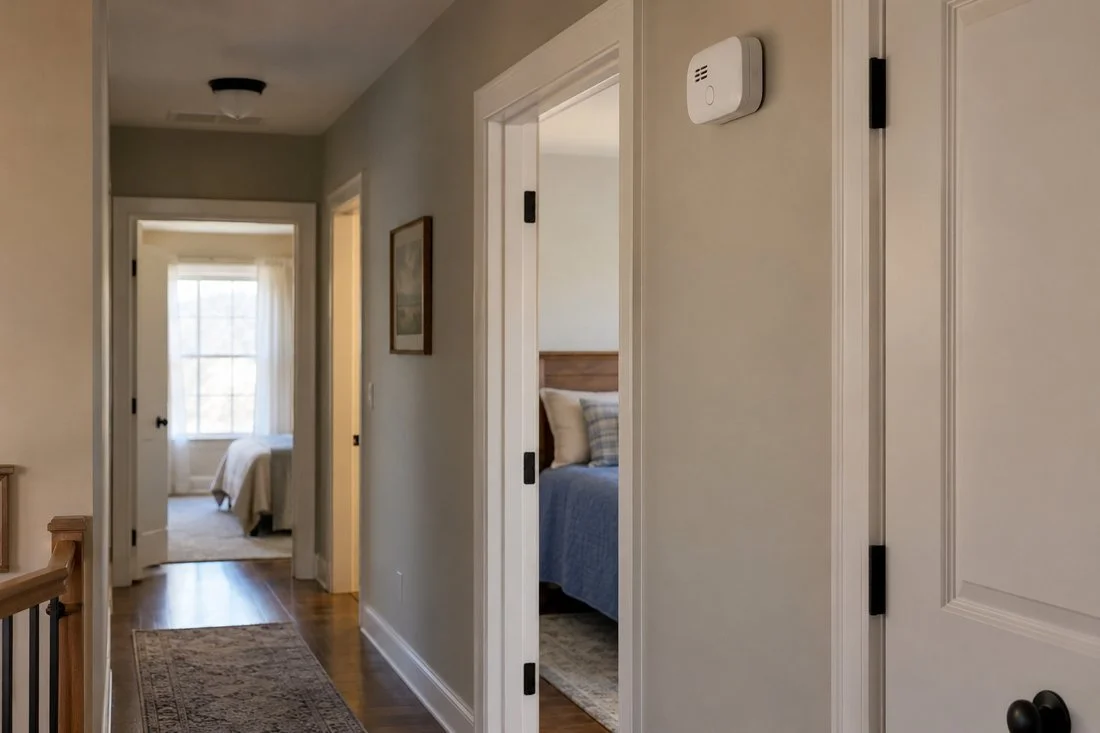
Carbon monoxide, or CO, is a gas you can't see or smell. In winter, furnaces, water heaters, fireplaces and generators all run more, and each of them can produce it. A working CO alarm near every sleeping area warns you when your senses can't. If one sounds, get everyone outside to fresh air and call 911.
Why it matters in winter
The Centers for Disease Control and Prevention says CO poisoning not linked to fires kills more than 400 people in the U.S. each year. It sends more than 100,000 to the emergency room, according to the agency's CO poisoning basics page. Everyone is at risk. Babies, older adults and people with heart disease, anemia or breathing problems are more likely to get seriously sick.
The early signs feel like the flu: headache, dizziness, weakness, upset stomach, vomiting, chest pain and confusion. The U.S. Consumer Product Safety Commission notes the flu-like signs come without a fever. People who are asleep can die before they notice anything. That's why an alarm matters most at night.
Where to put CO alarms
The U.S. Fire Administration says to put CO alarms outside each sleeping area and on every level of your home. The CPSC's carbon monoxide fact sheet adds two details:
- Choose an alarm that runs on batteries or has a battery backup, so it still works when the power is out.
- Look for an alarm that meets the UL 2034 safety standard. It's printed on the package.
The CDC says to check the batteries when you change your clocks in spring and fall. Replace the alarm when the maker says to, or every five years.
Winter habits that lower the risk
These tips come from the CDC, CPSC and U.S. Fire Administration:
- Have your furnace, water heater and other gas, oil or coal appliances serviced by a qualified technician every year.
- Check the chimney or have it cleaned each year. A blocked chimney can push CO back into the house.
- Clear snow from outside vents for the dryer, furnace, stove and fireplace after a storm.
- Never heat your home with a gas oven.
- Never use a camp stove or burn charcoal indoors. The CPSC says not to run an unvented fuel-burning heater in any room where people are sleeping.
- Never warm up a car in an attached garage, even with the garage door open.
- Run a generator outside only, more than 20 feet from windows, doors and vents. Open doors and windows don't make a garage safe.
If the alarm sounds
The CPSC says to:
- Move outside to fresh air right away. Don't stop to look for the source.
- Call 911 or the fire department once you're out.
- Stay out until emergency responders say it's safe to go back in.
- Don't use the appliance you suspect until a trained technician checks it.
Safety guidance was checked November 9, 2026.