When a vegetable crop is finished, sort its remains before clearing the bed. For Bolivar gardeners, a useful fall cleanup has three parts: remove troubled crop plants, compost healthy material, and protect soil that will sit bare.
Start with the crop's condition. A winter vegetable still growing needs a different plan from a dead tomato vine.
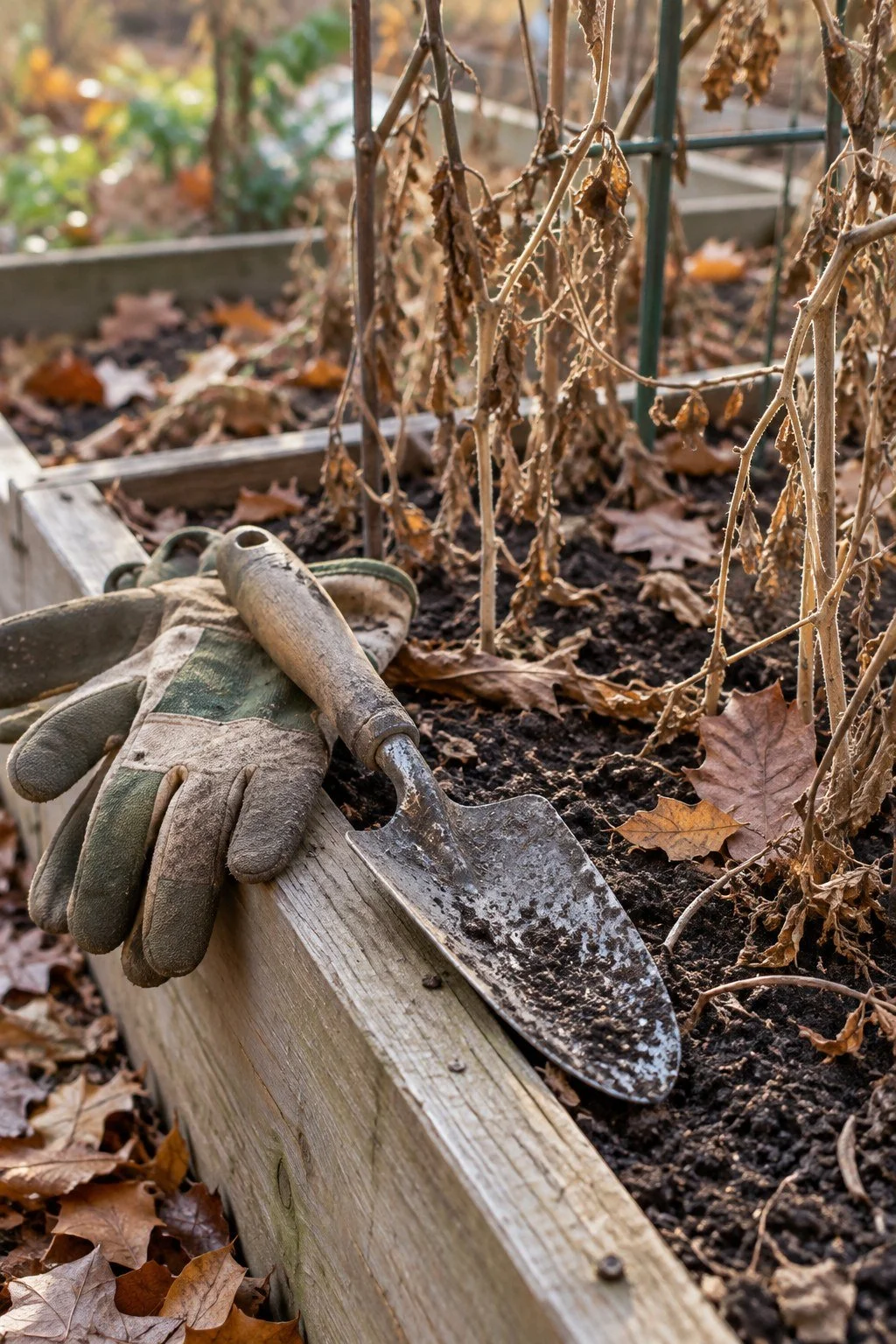
Sort finished crops before making a compost pile
MU Extension's fall garden cleanup guidance recommends removing finished vegetables while leaving winter crops. Healthy plants can go into compost. Diseased or insect-infested material should be discarded.
Use two separate piles as you work: one for healthy material and one for plants with problems. Keeping them apart helps you avoid mixing a diseased vine into the compost later.
If you cannot tell whether a plant is healthy, leave it out of your home compost until you get help. The MU guide recommends discarding material when you are unsure.
Give dead tomato plants their own rule
MU Extension's October 2026 garden advice recommends putting dead tomato plants in the trash because they are prone to disease. It also keeps diseased, spotted, or discolored growth out of home compost.
Pests and disease can survive in crop remains. Composting troubled plants can carry those problems back to the garden when you spread the compost.
For disposal, check your hauler's current rules. The garden advice does not establish what a Bolivar pickup service accepts.
Cover empty beds and leave suitable habitat
The same MU fall garden advice recommends fallen leaves or compost to help keep bare soil in place. A cleared bed can still have a protective cover over winter.
In nearby perennial plantings, suitable dead stems and leaves can shelter beneficial wildlife. Keep that habitat choice separate from removing diseased vegetable plants.
Make soil changes based on a test
The MU garden cleanup guide describes fall as a time to improve garden soil with well-decomposed organic matter. It recommends using soil-test results before adding lime or fertilizer.
Before adding those products, find out what the bed needs. Ask for help if you are unsure how to collect a soil sample or read the results.
Ask a local Extension office about uncertain plants
MU Extension in Polk County is at 110 E. Jefferson in Bolivar. The phone number is 417-326-4916.
If a plant had spots, wilt, or another problem, describe what you found before asking whether it belongs in compost. Name the crop and keep any clear photos you have. That gives your question a useful starting point.