Before freezing weather, disconnect, drain, and store your outdoor hoses. Then check how each faucet's water supply is shut off and drained. If you rent, ask your property manager which steps maintenance handles.
The goal is to reduce the chance of trapped water freezing. The right valve and draining steps depend on your home's setup.
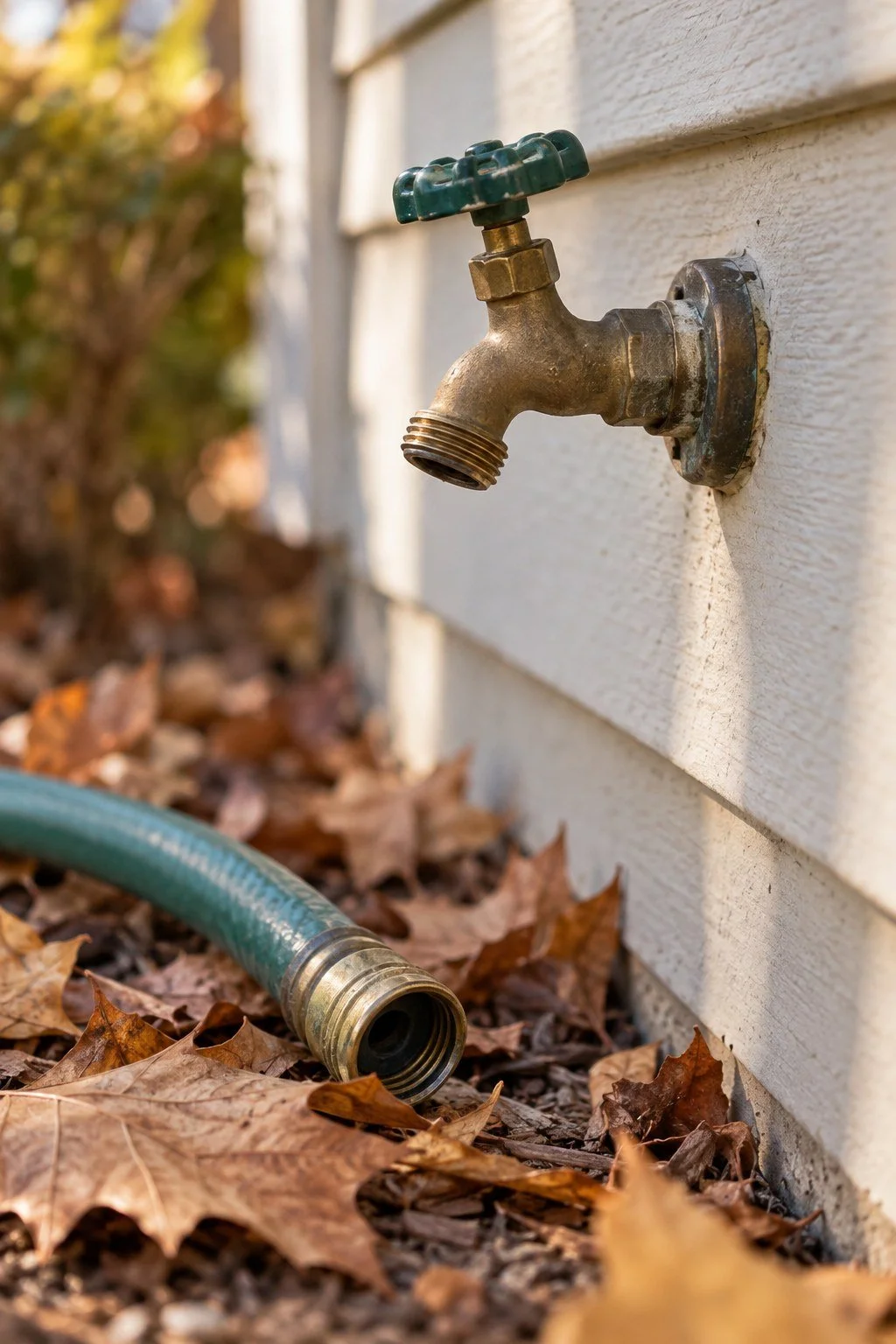
Remove the hose from each outdoor faucet
The Missouri Public Service Commission's water-pipe guidance recommends draining and removing outdoor hoses. Walk around the home so you include the side or back connection you use less often.
Disconnect each hose, let the water drain, and store it. If a fitting is stuck, stop before forcing it or twisting the faucet. Ask the owner, property manager, or a plumber for help.
Illinois Extension's outdoor plumbing guidance explains why the hose matters: leaving it attached can keep water in the line. Ice can then extend back toward the faucet and house.
Identify the shutoff that serves that faucet
MU Extension's frozen-pipe prevention advice recommends shutting the indoor valves that feed outdoor faucets and draining the lines where possible. Springfield's City Utilities winter guidance also calls for removing hoses and shutting outdoor supply valves.
First, identify your faucet type and any separate indoor shutoff. Use the fixture's instructions. If you cannot identify the right valve, have a plumber or property manager check it. Do not force a stiff valve.
For a setup with a separate indoor valve supplying the outdoor connection, the American Red Cross describes the sequence: close that supply valve, then open the outside faucet so the line can drain. Its guidance leaves the outside valve open for remaining water to expand. Confirm that this procedure fits your fixture before using it.
Check insulation and cold-air gaps
MU Extension recommends an insulating foam dome or other cover over outdoor faucets. It also recommends following the maker's directions for pipe-insulation products.
Check areas you can safely reach for gaps that let cold air near water lines. The PSC's prevention checklist calls attention to outside faucets, crawl spaces, garages, and other unheated areas.
A cover does not guarantee protection in every condition. Illinois Extension notes that even faucets called frost-proof can freeze, depending on the cold and the home's insulation. Removing the hose still matters.
Keep the work clear if you rent
Before changing valves, ask your property manager:
- Which outdoor connections should I prepare?
- Which valve serves each connection?
- Will maintenance drain the line and fit any cover?
- Who should I contact about a leak or stuck fitting?
Use a photo to identify the connection if needed. Follow the property's plan rather than trying valves to see what happens.
Know where routine preparation ends
Learn where the main water shutoff is, as the PSC recommends. Use it as part of an understood emergency plan. Do not shut off a whole building's water to identify an outdoor faucet valve. The PSC notes that doing so can also disable a home's fire sprinkler system.
If a connection is leaking, damaged, or already frozen, stop the routine checklist and get qualified help. This preparation plan does not cover thawing or repairing pipes.